
The Meta-stasizing Cancer of Indirection
A widening chasm between Zuckerberg and reality
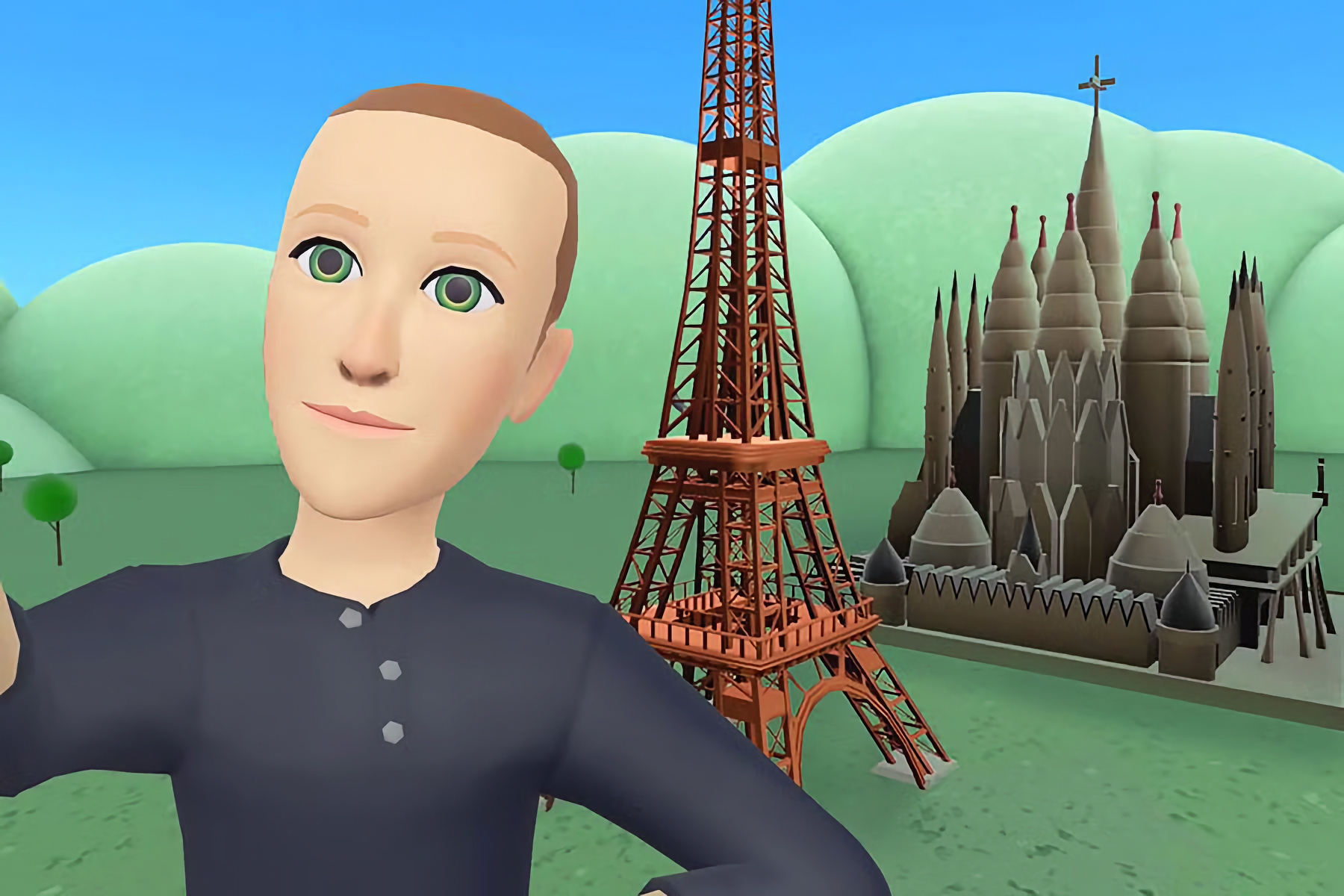 If you can believe it, this image isn’t AI-upscaled. Image: Meta.
Meta has a leadership problem.
Over the last year, the company, at the behest of Mark Zuckerberg, has found itself in a disreputable position. After falling behind in the artificial intelligence race, it released Llama 4, an open-weight model so bad that it had to release a model specifically trained on the benchmarks to appear better than it actually was. After the spectacular failure of Llama 4, it hired Alexandr Wang, the chief executive of Scale AI, through a faux acquisition to bolster its fledgling AI models. It reorganized its AI division to support Wang and released a feature called “Vibes” in its Meta AI app — previously used exclusively to connect its popular smart sunglasses — which allows users to create short, AI-generated videos. That too failed. The Meta Ray-Ban Display smart glasses, which relied so heavily on Meta AI that they failed live during the announcement keynote, also flopped in the market. And now, it pushed back its next-generation models, considered licensing Gemini models in the meantime to support its products, and is about to lay off 20 percent of its staff.
How did the company that makes the world’s most popular monetized internet services — Facebook, Instagram, and WhatsApp — get here? And why is the leader who once was so bullish on the metaverse — so much so that he renamed his entire company after it in 2021 — pivoting hard to a technology that had led his company so deeply into the ground? The answer to both of these questions is quite simple: Mark Zuckerberg is an incompetent person, and his company lacks direction, morals, and technical talent. He blew hundreds of millions of dollars on capital expenditure without shipping any meaningful products to either make a profit on or to at least appease investors. He overpaid for mediocre AI researchers and executives just to make splashy headlines, and in the end, those talent acquisitions went so poorly that he was left to defend his confidence in his team by posting a selfie of Wang and him to Threads. These are not the actions of a competent business executive. Competent executives don’t fire large swaths of their staff periodically.
I wasn’t planning on this being a full-blown article, but the more that unfolds here, the more it becomes obvious that Meta is going through a crisis.
The Metaverse
Zuckerberg announced his plans to switch directions to the metaverse in 2021, when he renamed Facebook to Meta to signal a new era for the company. His idea was that people would spend the majority of their time cooped up at home, weary of the pandemic, and needed a way to socialize. Meta, owning a monopoly on socialization on the internet, he thought, would naturally succeed in this market. Upon the rebranding of the company, the series of Oculus headsets — acquired many years earlier — became central to his new goal of social networking through virtual reality. The best engineers from Oculus, through a reorganization, joined Meta Reality Labs, a division of the company dedicated to pursuing new hardware and software experiences in the metaverse, a digital universe in VR.
This went poorly, not only due to the natural ebbing of the pandemic, but because Zuckerberg’s metaverse plan was antisocial. Facebook became so prominent initially because it was used by college students who wanted to chat with their fellow classmates on the internet. It then expanded to everyone else as the internet grew — people wanted to stay in touch as they moved places, changed names, and grew old. Facebook, to this day, is different from Instagram and X in this key way: Facebook connections primarily begin in person. Discussion groups for moms at a school; neighborhoods organizing garage sales and potlucks; and middle-aged people connecting with their college classmates from decades ago. These are prime examples of how Facebook is used today. The platform thrives on in-person connection.
The acquisition of Instagram was interesting because it brought Facebook to the celebrity side of social networking. While people use Facebook to connect with people they already know, Instagram is a virtual world in and of itself. Popular culture, the news, and trends all thrive on Instagram. In a way, Instagram is a metaverse, sans VR. But Instagram’s barrier to entry was so low that people could segment their online lives between reality (Facebook) and idealized (Instagram) versions. The two platforms naturally jibed well together, though their average age demographics naturally diverged due to the change in mentality. Still, you’ll find plenty of millennials who use and enjoy both platforms — after all, they’re two apps in the same folder for hundreds of millions of people across the globe.
The metaverse — the VR one, that is — is different. It assumed everyone (a) would be lonely forever, and (b) wanted to be lonely. And it also, most alarmingly, assumed normal people would spend hundreds of dollars on a VR headset to see animated versions of internet strangers. Succinctly, Zuckerberg — bizarrely — assumed people wanted to spend the majority of their time working and living in a version of Instagram where everyone is a legless avatar. And these avatars weren’t human in the slightest — they were a poorly constructed version of Apple’s Memojis, again, without legs and with floating arms. It doesn’t take much to posit that this is an unrealistic assumption, even if the pandemic lasted forever. This is just a terrible technology that benefits nobody.
Yet nobody at Meta pushed back, despite the company losing millions to this nonsensical metaverse endeavor, because their salaries would be paid by the actual moneymakers: Facebook and Instagram. That was still what the vast majority of Meta engineers were working on, and for good reason — it takes a lot of people to maintain those systems. But the result of this was that the newly named Meta was living in a vacuum, one where Zuckerberg had no internal resistance to his pet project. It wasn’t successful for the reasons I outlined earlier, and the company was still turning a profit on social media. Everything was fine from the surface, but inside, there was a widening chasm between Zuckerberg and reality.
The AI Boom
By late 2022, when OpenAI’s ChatGPT first came into beta, Zuckerberg was bullish on the metaverse. He was spending like crazy, hiring like crazy — generally just crazy. But this widening chasm between where Meta’s money actually came from and its leader’s intentions would become a major problem when a crisis set in over the Valley. As OpenAI flourished, the rest of Silicon Valley began to panic, as the success of ChatGPT started a five-alarm fire. The message was to hurry up — AI chatbots were the direction of the future. While Microsoft had already been set up for success through its investment in OpenAI, and Google was nearly ready to launch Bard, its version of ChatGPT, Apple and Meta were left directionless. Specifically, Zuckerberg had to pivot, and fast.
When a company must drastically pivot in such a short time period, it needs a solid foundation of revenue and company leadership. Frankly, the whole company must be on the same page. Google had developed a company culture for years centered around AI and machine learning. It quite literally built the transformer architecture, the T in GPT. So for Google, which had already been training models like GPT-3.5, this was certainly cause for concern, but the company knew that it could handle the pressure. This isn’t to say that Google was out of the water — it wouldn’t be until a few years later, when Gemini models finally became competent — but it could at least swim back to the shore and rely on advertising revenue to buoy itself.
Meta was directionless. This chasm between the reality of the company’s engineers and the delusions of the C-suite created an unsteady foundation the company couldn’t rely on. As an example, it wasn’t nimble enough to pivot to AI — it was already losing so much on the metaverse and prioritized hiring to make that effort work. Zuckerberg and his team would have to choose in the coming months: ditch the metaverse now and go gung-ho on AI, or stick with the metaverse in the hopes that the bubble would pop. I assume Zuckerberg was steered away from the second choice, but was indecisive enough not to choose the first one, either. He ended up somewhere in the middle: open-weight models.
These models would obviously be less computationally expensive to train and run, and would require less AI talent, but perhaps they could compete until Meta sorted itself out. And initially, they did, at least enough to impress early adopters and run in Meta’s apps like Instagram and Facebook. But now the company was hemorrhaging money from two places: the metaverse, for obvious reasons, and AI, which is still not profitable as of 2026. Zuckerberg was paralyzed in indecision — his heart was with augmented reality and VR, evidenced by the rollout of the Ray-Ban Meta glasses in September 2023, but his company had to pivot to AI. Eventually, this became untenable, as the company’s financial situation was perilous, and he restructured Meta throughout 2023, cutting 22 percent of the workforce.
As the layoffs continued in 2024, cutting more of the company’s core technical staff to make way for the transition to AI, Zuckerberg put the metaverse on pause and began integrating Meta AI throughout its products, including the hit sunglasses, to little fanfare. Meta was already too late, and it missed out on key talent. While this was brewing in public, Zuckerberg donned the stupid T-shirts, gold chains, and broccoli-cut hairstyle and tried to make a name for himself. He attributed this failure not to his incompetence, but to his unpopularity. The problem wasn’t that Zuckerberg was unpopular — it’s that his employees didn’t know what to do. Outside, they were seeing the collapse of the software engineering industry as the Valley cut programming jobs across the board, and on the inside, they had no AI strategy in their own company and the prospect of losing their jobs to one of Zuckerberg’s “strategic” 2024 cuts. There was no clear communication to the thousands of employees hard at work on the metaverse.
Complete Collapse (Not the Sleeping With Sirens Album)
Eventually, Meta employees would get their answers. In early 2025, Zuckerberg continued with his cuts to the company’s “lowest performers,” blaming the losses on its employees rather than Zuckerberg’s own indecision and incompetence. When Llama 4 came out, it was so bad that Meta cheated on the benchmarks to briefly get a return on some of its capital expenditure, but that too fell apart. From February to April, Meta’s valuation and stock price fell precipitously, with useless AI models, a dying metaverse, and most alarmingly of all, a demoralized workforce bracing for yet another round of layoffs. Meta continued laying off its core product engineers and replaced them with machine learning engineers.
As the year progressed, Meta fired more of its Reality Labs members and wound down the metaverse. It began advertising pay packages upwards of $100 million to attract top AI talent in a massive boost of capital expenditure, and it prayed that the Meta Ray-Ban Display glasses would be a hit. It hired Wang to revive its AI strategy. By the end of the year, however, most of these efforts were shown to be fruitless — quite literally. Meta’s two main projects, under Wang’s leadership, were Mango and Avocado — code names for the company’s photo and language models, respectively. These models, according to Andrew Bosworth, Meta’s chief technology officer, would be closed-source, as Meta was investing plenty of capital in their development. Set to release at the beginning of 2026, they were delayed to the summer, according to reporting from The New York Times.
That brings us to the present tense. Meta now has a severe leadership problem. It plans to lay off 20 percent of its staff this year due to “AI” and still doesn’t have models that its remaining employees can feel proud about. And the metaverse is now entirely dead — in March, it announced Horizon Worlds, its metaverse platform, would be shut down in virtual reality1. Its staff is demoralized and directionless, probably fearing they’ll be among the 20 percent to be ejected into a job market unfriendly to software engineers. Zuckerberg still doesn’t have a plan, in keeping with his incompetence — he’s bullish on AI, but it’s not like Meta has anything to show for its last three years of work. The metaverse is gone, the Meta Ray-Ban Display glasses are an abysmal failure, nobody uses Meta AI, and its models are indefinitely postponed. While all of this happens, Meta decides to publish an OpenClaw competitor, Manus, and acquire MoltBook, a vibe-coded social network exclusively for agents.
I’ve always said that Meta is an evil company to work for. I still don’t know why anyone chooses to work for it, though I do know the company has a generous visa policy. If that remains responsible for a significant portion of its workforce, I truly do feel sorry. Nobody should have to work for an evil, terrible company, in fear of their job, just to stay in the United States. But while I used to call Meta evil just for its blatantly inhumane actions — promoting genocides, killing teenagers, and spreading misinformation — I now think the company is evil because it’s led by a person who doesn’t think about his employees.
My urge to write this article didn’t start after I read the headline about the Avocado model — it was after I read that 20 percent of the company’s workforce would be fired. For instance, employees of Downpour Interactive, a VR-focused video game studio bought by Meta in 2021, were moved to another studio after their work was unceremoniously shut down in mid-2025. The metaverse was always doomed, but it didn’t have to end with this much pain. And I’m afraid Zuckerberg’s incompetence will soon carry over to the AI market as well, as those employees will be laid off sooner than later after Avocado inevitably flops. All of this happened — and is still happening — because Zuckerberg is myopic and incompetent. That’s a deadly combination.
Just focus on social media. Put the fries in the bag, bro.