
At WWDC 2026, Siri AI Aims to Make Amends
The ‘more personalized Siri’ is finally here — and it’s worth its salt
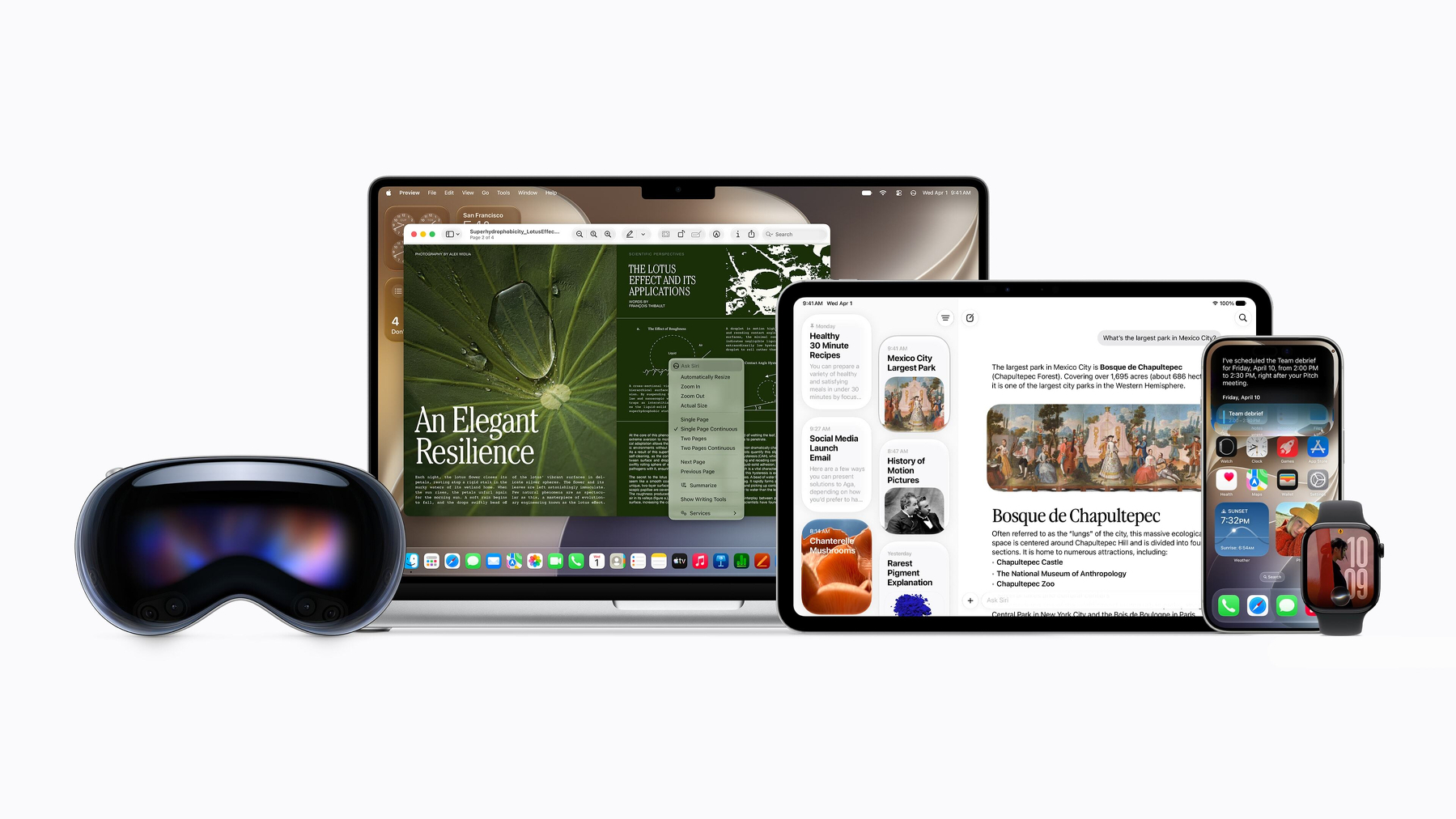 Siri AI is here. Image: Apple.
Hey Siri, play “We Are the Champions” by Queen.
On Monday, live from its Worldwide Developers Conference in Cupertino, California, Apple’s reorganized artificial intelligence division had one noble goal: Make Siri a champion. The new, completely revamped Siri, dubbed Siri AI, has been two years in the making since its initial announcement at WWDC 2024. Since then, the colloquially named “more personalized Siri” has suffered setback after setback, initially slated for release in spring 2025 before being postponed to the following spring, and finally to the next generation of Apple’s operating systems. Much of the old Siri team is out — Robby Walker, the leader of the Siri division, resigned; John Giannandrea, Apple’s machine learning chief, whom the company poached from Google, was unceremoniously stripped of his duties and retired.
Siri AI realizes the vision Apple had for Apple Intelligence all along: a suite of frontier-class large language models, running mainly on-device, that can handle web searches, tool calling, and agentic work in a user interface familiar to ChatGPT users. Siri AI might be the flagship product, but Apple executives are eager to emphasize that Apple Intelligence is flexible and extensible for the company’s future AI endeavors. Siri AI is fast, powerful, private, and perfectly Apple-like. It turns a product genre almost universally besmirched for its “sloppiness” into a service worth using. And none of it is vaporware — it all shipped Monday for app developers to integrate with.
Expectations are sky-high for Siri AI and the slew of other Apple Intelligence announcements unveiled during Monday’s keynote: everything from the new system-wide dictation models that instantly vaporized a class of Silicon Valley start-ups overnight to the new image manipulation tools that rival Google’s. There is much ground to cover, but in many ways, WWDC 2026 was a return to the status quo for a company that has faced its biggest turmoil in years. After years of anemic developer relations, executive turnover, and a controversial redesign of its operating systems, I’m happy to say that Apple clocked a win this week — and so will the millions of Apple users come September. The Silicon Valley enterprise best known for making great products has, again, shipped a great product. The question now is whether its tardiness is excusable.
The Architecture
There was a not-so-distant moment when we all thought none of this would ever ship — when the story of the new “more personalized Siri” seemed destined to resemble that of the AirPower — unveiled at a high-profile keynote, delayed, and never to be spoken of again. It didn’t help that, concurrently, a deluge of rumors was swirling about Apple’s AI division and leadership. Employees were directionless, progress seemed stagnant, and new bugs seemed to stymie the project’s launch for years. At the core of the new Siri project, unveiled at WWDC two years ago, was an LLM that called App Intents actions in apps, leveraging a so-called “personal context” gathered through a semantic indexing feature. Each of these distinct parts suffered setbacks.
For one, the LLMs of the time — let alone the comparatively limited ones Apple had developed amid a lack of funds — were not advanced enough to reliably call tools. To meet expectations, the model must be post-trained on those tools and usually undergoes a process called reinforcement learning to reward the model when it correctly calls a tool. These tools — like web search and code interpretation — are exposed as instructions in a hidden section at the beginning of a chat. Apple wanted to expose App Intents, a protocol that allows apps to donate actions to the system, as tools for the model, but Apple’s models at the time were insufficiently trained to call these tools. The resulting product was practically unusable because it never reliably performed actions within apps, a marquee feature of the new Siri.
The new Siri also relied heavily on personal information to distinguish itself. While OpenAI and Anthropic were forced to rely on public application programming interfaces, or links to system data, Apple and Google could leverage personal data they already knew about users. Apple’s solution was to rely on a new framework called the personal context, a collection of user data that the model could tap into at any time. It was an early implementation of memory — a feature now built into every major chatbot — but perhaps more advanced, as it required apps to donate snippets of information. Apple planned to allow apps to contribute information like messages, notes, and emails to the system via the semantic index. But again, the models were too underpowered to know what information they needed for a query — they didn’t know what to look up in the personal context to answer a question.
Two years later, Apple is partnering with Google to distill Gemini models for use in Apple Intelligence.1 The models work in a new architecture where a classifier model, known as the system orchestrator, determines the type of query and which information and models are needed. The chosen model then calls the tools and returns an answer, usually on-device and occasionally in the cloud. There are three types of information the system orchestrator may deem necessary: the app toolbox, the semantic index, and on-screen context. Once the query is assigned to an adequately sized model, it may choose to use Apple World Knowledge, a pseudo-web search engine developed by Apple for its foundation models.
The app toolbox includes App Intents made by third-party developers. Any action in an app can be an App Intent — they run by silently launching the app in the background. Examples include playing a song, sending a message, or marking a task complete in a to-do list app. App Intents already exist across the system, such as in interactive widgets, Spotlight, and most importantly, Shortcuts, where their breadth is fully appreciated. The semantic index includes data from these apps — corresponding examples include the music in a person’s library, messages people have sent, and tasks in a to-do list. Developers can contribute actions and data through the App Intents framework: actions are called intent schemas, and data points are entity schemas. Apple’s foundation models can also, when requested, capture a screenshot of an app and analyze visual content.
Apple Intelligence uses two on-device models and three cloud models. All five are built “in collaboration with Google” and are pre-trained on Google’s silicon, known as tensor processing units. The two on-device models, AFM Core and AFM Core Advanced, have three and 20 billion parameters, respectively.2 The latter is only available on newer Apple devices and is not required to use most Apple Intelligence features — it actively uses only three to four billion parameters at a time through a mixture-of-experts architecture, i.e., the model chooses which parameters are relevant for a query as opposed to loading them all concurrently.3 AFM Core Advanced is also natively multimodal for voice and image processing. Craig Federighi, Apple’s software chief, said most queries rely on these on-device models.
Two of the cloud models are similarly distilled and made in-house by Apple: AFM Cloud and ADM Cloud, an image diffusion model. (ADM Cloud is used for image generation features in Image Playground.) The on-device classifier chooses to send longer, more intricate queries to these models, hosted by Apple’s own Private Cloud Compute servers. These models are specially designed to run on Apple silicon, much like the on-device AFM models. Their size, however, makes them impractical to run on mobile devices. For the most demanding queries, Apple Intelligence uses AFM Cloud Pro, a Google-made model post-trained by Apple that runs in Google Cloud’s Nvidia servers. Apple is, notably, not relying on Google and Nvidia’s privacy stack — these servers will still use Apple’s Private Cloud Compute software, and only Apple is authorized to run inference on them. Apple user data, as Federighi stressed, never touches non-Apple software.
This architecture puts to rest the incessant speculation that Apple would somehow abandon Private Cloud Compute for Google Cloud, which I have always dismissed as a preposterous rumor. Apple Intelligence continues to run on Private Cloud Compute — usually on Apple’s bespoke hardware running Apple’s own models — and most of the time, it relies on on-device processing anyway. (I can confirm this while testing Siri AI.) I believe this nets Apple two crucial wins: privacy and environmentalism. Private Cloud Compute, for the most part, runs on renewable energy, and on-device models are the most energy-efficient way to run inference. And Apple can wax poetic all it wants about how users’ data is never used for training or even seen by the company.
The new models and APIs are designed to work reliably and quickly. Siri AI should be able to understand a query through the classifier, gather the requisite data, send it to an appropriate model either on-device or in the cloud, optionally search the web, and return a result. App developers should be able to donate actions and information to the system. And the models themselves — since they’re distilled from Gemini — should be powerful enough to call tools efficiently and produce accurate responses. The new Apple Intelligence architecture — as complicated as it may seem — appears sufficient to meet those demands.
Siri AI, Née the More Personalized Siri
As Mike Rockwell, the executive under Federighi responsible for the new Siri project, said onstage, Siri AI’s paramount priority is better capability. I’ve written many times that any platform-native AI product must master three modalities: device use, search, and agents. This might seem simple enough, but excelling at all three has proven to be a difficult task for LLMs. The new Alexa+, for example, was fine at search and agents, but regressed in the most basic tasks, like controlling smart home accessories, because LLMs are inherently nondeterministic. The classifier, therefore, must choose which architecture to use: the deterministic one or the lossy one. Or, occasionally, some combination of the two.
Siri AI supports all three modalities. App Intents function as programmatic, lossless gateways to agentic work in apps; the Apple World Knowledge search engine gives models access to reliable, recent information; and Spotlight — now combined with Siri AI — is a reliable interface for file search. When Siri AI doesn’t need an LLM, it doesn’t use one. It uses App Intents, for example, to change settings, search for files, or play music. The model is in front of the interaction, not behind it — it only serves to process and analyze the query before calling a faultless, programmatic App Intent. When Siri does need an LLM, such as to summarize web results, it hands the query off to a more powerful model, perhaps in the cloud, to come back with accurate results.
Users can invoke Siri AI in two main ways: by pressing and holding the Side Button to open voice mode, or by swiping down from the middle of the screen to open the combined Spotlight and Siri AI view from the Dynamic Island. (It is also possible to swipe down on the Dynamic Island, but I have a hunch Apple will remove that after complaints.) On macOS, Siri AI can be invoked through the “Hey Siri” wake word, a system-wide context menu, or Spotlight. Siri effectively resides in Spotlight, and when it detects a query that matches no search results, it kicks off a Siri AI prompt. Spotlight is not replaced by Siri AI; the two features live in congruity. On all platforms, Siri AI has a gorgeous animation when it’s listening to user input or reasoning. It shows a spinning icon of six circles and occasionally makes soft beeping sounds to indicate it is reasoning after a few seconds. Results show in a semi-translucent black-and-clear sheet that takes full advantage of Liquid Glass.
When using voice mode, Siri writes shorter answers, usually one or two sentences. It doesn’t show web search sources visually in the first beta, but it does read them aloud, a minor gripe of mine. The system, as a result of its brevity, is fast — much faster than the keynote demonstration, a classic case of underpromising and overdelivering. Cloud and web search queries take slightly longer to process, but they’re still almost instantaneous compared to chatbots like ChatGPT and Gemini. And unlike Google’s flawed AI Overviews, I have yet to experience a single hallucination or uncanny response. I partially attribute this to the models having little personality: they’re quite dry compared to even Gemini. Users can pull down on the initial answer to view a chat interface and continue the conversation.
Conversations are saved in the initially barebones Siri app. The app truly looks as if it were cobbled together by Claude Code on the eve of WWDC; I assume it’ll improve through the betas. The app shows a monochrome list of conversations, and tapping on one opens a chatbot-style interface with options to attach files or enter voice mode. While the interface looks eerily similar to ChatGPT, it still has all of the same Siri features. People can ask it to, for example, play music or toggle a setting; it isn’t limited to typical chatbot-style conversations. It’s certainly possible, though uncanny, to open a new chat in the Siri app and ask it to turn on dark mode from there — it will happily display the toggle and everything, just like normal Siri.
All of the initially marketed features — including those from 2024 — function in the beta. Siri AI can call existing App Intents from developers who’ve already added them, and it can search the personal context. (The personal context is currently limited to first-party apps, as no developers have added support for it yet.) The system itself is usually quite accurate and triggers the correct tools, but it is sometimes trivial to confuse. I asked the model, “When was my last flight with United Airlines?” and instead of checking my email inbox for a confirmation, it ran the United Airlines app’s App Intent to list recent flights. I had to tell the model that it had been a few months since the flight for it to look in the Mail app. Perhaps a human assistant who didn’t know off the top of their head when my last flight was would have made the same mistake. (I can see the “When does my mom’s flight land?” scenario from 2024 working perfectly in this beta.)
Siri chooses which tools to call and expose in the interface. When an App Intent returns a result, it displays it in-line, just like the previous version of Siri. When an answer only requires text, it prefers headers and paragraphs to bullet points. The model doesn’t expose its reasoning traces or say how long it has reasoned for, and the interface isn’t cluttered at all, remaining focused on the answer and App Intents. It also doesn’t indicate whether inference was done on-device or in the cloud, but all of mine were clearly done on-device — my iPhone 17 Pro warmed up considerably while testing Siri AI. (iOS 27 is otherwise remarkably stable.) If Siri pulls from the personal context, it displays the information — such as an email, text message, or note — in an App Intent-like bubble, which can be tapped to view the source content. (Sources are always displayed at the bottom of the response in the Siri app.)
Web search results and world knowledge are fast and reliable. This is where the new Siri truly feels like a ChatGPT-style product and less like the original version. It’s a full-blown LLM, after all, and it knows everything, often without even having to reach for the web. Chances are, most people accustomed to the free Gemini and ChatGPT models won’t even notice a difference in accuracy when using Siri. (The models are definitely less sophisticated, though.) Siri even passes the “car wash test” when asked, “If a car wash is 5 meters away, should I walk or drive there?” In practice, the model was able to do time zone conversion, simple explanations, and more complex math through its own parameters. The model never lists search results; it always chooses to summarize them in a paragraph.
Apple’s keynote demonstrations, notably, were not aimed at ChatGPT, and I think this is emblematic of the company’s strategy: Siri AI isn’t meant as a replacement or competitor to ChatGPT. OpenAI has the model advantage, but Apple has the ecosystem advantage. There’s a reason that both Gemini and ChatGPT are equally popular — it’s not because there are two billion unique users of AI chatbots altogether, but that the billion people who use ChatGPT are also likely to use Gemini. Those people will probably also use Siri AI — if they own a new-enough iPhone, at least — to do things they’ve always asked Siri for, just with more precision and depth. Siri, for most people, has always been — and fallen short of being — an assistant to handle small tasks on their iPhone, like sending messages or finding emails, and now that experience will be augmented by generative artificial intelligence.
This is the central, axiomatic thesis behind each of Apple’s demonstrations: The appeal of Siri AI is not the models themselves, but what the models enable. The models are simply how Apple gets to a Siri that lives up to people’s needs and desires, and what ultimately suspended the project for two years. By contrast, the appeal of ChatGPT is the models, not the product. There are hundreds of products just like ChatGPT on the App Store, but what keeps OpenAI at the top of the list, even among its most direct competitors, is its models. The models are OpenAI’s moat; the data is Apple’s moat. Apple, unlike OpenAI, doesn’t have to attract new developers to build Model Context Protocol-powered apps. It doesn’t need them to build GPTs or skills or plugins or whatever other gimmick OpenAI cooks up to charm users. It has the App Store, a moat so brilliant that it has been sued countless times on nearly every continent for its brilliance.
People won’t go to Siri AI for writing advice or therapy. It won’t be the most powerful research tool, write software, or solve the next Erdős problem. The distilled Gemini models aren’t there for the sake of being great models — they’re there to leverage Apple’s idiosyncratic moat. I don’t think the ramifications of Siri AI will be felt in Silicon Valley writ large because it will not replace the usage of ChatGPT, Gemini, or Claude. The models just aren’t there, and they don’t have to be for Siri AI to succeed. I can see some Google Search market share fading due to Siri AI’s placement in Spotlight, but (a) as I wrote last month, Google wants that to happen anyway, and (b) the volume of Google searches is so high that it’ll barely make a dent. Siri AI is for the people who use their Apple products all the time and just want Siri to work.
Concurrently, I think Silicon Valley misconstrues just how large that contingent is. Siri, in its current, nearly-inept state, processes billions of server-side requests. People ask Siri legitimately difficult questions and hope for useful answers. If I had to guess, most of those questions are web search-related, and the new Siri is fantastic at synthesizing content from the web. All LLMs are, and the new Siri does it quickly and on-device. The Valley has spent Monday underselling the new Siri’s utility because it lives in its own hive mind, detached from the rest of humanity. Nobody cares about coding agents and “loops,” whatever they are — they just want to know when the next New York Knicks game is and when Subway closes. And believe me, the volume of people asking ChatGPT about the Knicks game on Monday is tenfold the number of people who have ever heard of Codex. Apple is not behind on anything meaningful; the rest of the Valley is putting the cart before the horse.
This is an unwonted claim from me, but I think Siri AI does almost everything it must. It’s amazing at quick searches, App Intents are smart and more useful than anything OpenAI has ever unenthusiastically shoved into ChatGPT, and it’s a good voice assistant. There’s very little slop here, and, dare I say, the vibes are quite phenomenal. Apple has always been a product company first, not a research lab, and Siri AI embodies that ethos strongly. Apple doesn’t even own the core technology — the Gemini models it distilled to make these Apple Intelligence features possible — but it has made a product that is somehow more compelling than much of even Google I/O this year. Apple is indubitably “behind” on AI because there are truly only two companies ahead: Anthropic and OpenAI, but I’d argue that catching up to them is a trapdoor anyway.
As I wrote in 2024, the developer story still has a metaphorical question mark looming over it, but I think major developers are more inclined to participate in AI features now than two years ago. The industry has diversified considerably since then, with Google and Anthropic now owning significant shares of the market. It would be petulant for major corporations like Uber, Google, and Microsoft to offer extensions for ChatGPT and Claude but snub Apple, whose user base theoretically extends far beyond any number OpenAI could ever hope to reach. I attributed my uneasiness in 2024 to developer tensions after the lackluster launch of Apple Vision Pro and the Digital Markets Act in the European Union, but despite stagnation in that part of Apple’s business, I think developers will be forced to act this time. There will be people who want Siri AI to work in all of their apps.
If the developer story has a happy ending, Apple would, in many ways, take the lead in the AI war. Start-ups and “Big Tech” have tried to teach vision models how to use computers natively and have gotten close in recent months, but those models are still nascent. App Intents are a programmatic alternative that don’t require an ultra-powerful model but can provide an equal or better user experience. (Anthropic and OpenAI also concluded that programmatic interfaces, like MCP servers and command-line interfaces, are more reliable than computer use, but with little broad support.) People could, all of a sudden, do legitimate agentic work on their device using the new Siri, like place orders, organize files, or send emails. I know from experience that App Intents are tricky for developers but not onerous to get right. I say every developer should hand the task off to an agent and see what happens.
The overarching theme behind WWDC this year is that this is real software for real people. It’s irrefutable that this is the kind of breakthrough that the AI industry, after years of insular thinking, needs to resonate with normal people asking the Valley what benefit LLMs and data centers have to them. No, the new Siri isn’t running on the most powerful models, but it’s a vastly more eloquent solution than anything Google has ever shipped, and it does the job prescribed two years ago dutifully, in Beta 1. There’s a long road ahead for Siri AI, but Apple is now where it needs to be, as long as third-party developer adoption remains strong. I’m pleased enough to give Apple a pass for now, not because it’s leaps and bounds ahead — or even because its tardiness is excusable — but because it has potential. Really strong potential.
The Rest
Siri AI and Apple Intelligence aren’t the same: Siri AI is a feature of Apple Intelligence. The models are integrated throughout the system in more helpful and creative ways, much more so than the initial 2024 set of releases. Existing features have been improved with the new models, such as Visual Intelligence and Writing Tools, both of which are now powered by Siri. In most text fields across the system — on iOS, iPadOS, macOS, and even visionOS — Writing Tools has been rebranded as Write with Siri, using the new models to draft emails, text messages, and notes, sometimes in a person’s own writing style. The Proofread feature uses a new user interface to underline and review changes, much like Grammarly. These are table-stakes improvements to features that languished during the first Apple Intelligence rollout, and I’m interested to try them throughout the betas.
Visual Intelligence is also baked into the Camera app, labeled as Siri mode. People can take photos of meals to get an estimate of their nutritional value and easily log them in Health; split bills by snapping a photo of the check; or import passes into the Wallet app. I assume the feature set will grow over time, similar to Google Lens. (Visual Intelligence still has the option to search Google, along with other third-party apps.) These features are also available when taking a screenshot or viewing a photo later. I think of Visual Intelligence as Apple’s consumer-facing name for image analysis, whereas Siri is the interface that displays answers. You open Siri mode, Visual Intelligence analyzes the image, and Siri gives you a response. Siri itself uses Visual Intelligence in the background to analyze photo uploads and for the on-screen awareness features. It even works on Apple Vision Pro — just look at something, either on-screen or in person, and ask Siri about it. I wonder what that could be for.
One of the most interesting underlying stories at WWDC this year was third-party model adoption. Apple doesn’t just want third-party developers to stop at supporting App Schemas — it wants them to use Apple’s foundation models in their own apps, either on-device or through Private Cloud Compute. Apple laid the groundwork for running its models in third-party apps last year, but this year, the models are far more powerful, especially now that they can run in the cloud. And if developers want to use third-party models, like those from Google or Anthropic, the company has updated the Foundation Models framework to simplify API calls to those providers, in addition to Apple’s models. (OpenAI was interestingly not mentioned, but it can add support for the framework if it wants.) If developers want to run third-party, open-source models on-device, they can use the new CoreAI framework to run efficient inference on Apple silicon.
Apple has integrated its own foundation models throughout various apps. In Safari, Apple Intelligence can group tabs by topic and monitor webpages server-side for specified updates. Users can also prompt the models to write bespoke Safari extensions. These are the kinds of updates that needed powerful, cloud-based models, and now the foundation models can write code with competence. They won’t be as fast or powerful as Claude Code, and the code certainly won’t be shippable to the App Store, but it’s amusing to see Apple embrace the personal software revolution this way. People can also prompt the system to create shortcuts in the Shortcuts app on their behalf. Powerful models make a difference.
Perhaps the most pertinent example of the models is the new agentic Automatically Fix Passwords feature. Current versions of iOS alert users to compromised or reused passwords in the Passwords app, but changing them has always been a bit of a hassle. On Apple Intelligence devices running iOS 27, Passwords uses an on-device computer-use model to log into the account, navigate to the Change Password menu, change the password using the Passwords app’s suggestion, and save the new one. It even collects two-factor codes from Messages or Mail if needed. I think this is such an ingenious application of computer use models, not only because the feature is plainly fascinating, but because it will improve security for millions of Apple users. I think every third-party developer ought to play around with the new models, for the sake of their users.
But playing catch-up has its consequences. In 2024, about Image Playground, I wrote:
I’m less concerned about the social justice angle many have seemed to stake their beliefs in and more about the feelings this feature creates. Apple users, engineers, and designers all share the conviction that software should be beautiful, elegant, and inspiring, but oftentimes, the wishes of shareholders eclipse that unwaveringly essential ideal. This is one such occurrence of that eclipse — a misstep in the eyes of engineers and designers, but a benison to the pockets of investors. Apple has calculated the potential uproar within a relatively and probably measurably minor slice of its user base isn’t worth it in favor of the deep monetary incentives, and it worked for the C-suite executives. Will Image Playground and Genmoji change the way people use and feel about their devices? Possibly, maybe for the best, or maybe for the worse — but what it will do with resolute certainty is upend the value of digital artwork.
Image Playground was contrived in the most un-Apple-like manner. It was never a good feature to begin with; hardly anyone used it after it was updated to use OpenAI’s image generation model, and AI-generated art is still overwhelmingly loathed. The foundational idea that someone can generate AI images of another person in their contacts is so beneath the Apple ethos. People legitimately and rightfully hold Apple to a higher standard than Google and certainly OpenAI. In an ideal world, Apple would’ve scuttled the feature after internal backlash, but alas, it has chosen to unscrupulously double down.
Image Playground in iOS 27 returns to using Apple’s own models, this time with new styles, including — try not to gag — “photorealistic.” I cannot believe Apple’s clearly tasteless executives have stooped so low that they now find it acceptable to put a photorealistic AI image generator that can create photos of real people in the pockets of hundreds of millions of users. Ideals be defenestrated — how has Apple not considered the backlash to AI image generators? It is not 2024, and AI image generators have become mainstream. The contingent advocating for their removal is not a minority, but clearly within Apple it somehow is. For a company once hellbent on producing products at the intersection of technology and liberal arts, it seems like it has eschewed its driving principle. Image Playground is unbefitting of Apple.
Perhaps that is not even the most objectionable of the image generation features announced this year. The Tools tab of the Edit menu in Photos now has three options: Clean Up, Extend, and Reframe. Extend and Reframe are the two additions, stolen straight from Google’s playbook: Extend generates new content to enlarge a photo after it has been taken, and Reframe allows people to adjust the angle and position of the camera, filling in gaps. Both of these tools muddy the waters and blur the line between photography and computer-generated imagery. A photo modified in this way after the fact does not exist — it is definitionally not a photo. Neither is it art, as it is created by a computer, not a human being with the skill and soul to produce a new work. The gall to produce something like this and call it a photo.
To a notable extent, I find Clean Up repugnant in much the same way, but at least in that case, the intent is to remove, not add. Additive content is intentionally misleading because it argues against the core principle of photography: to capture a moment in time. What good is that capture if it can be manipulated in whatever way by someone with no artistic ability? What is the utility of that capture if it is modified by a computer with no intent? This is not Photoshop; it encourages deception. There is no barrier to entry. As this technology develops, it inherently becomes more deceptive. This is a death spiral that nearly every company and government in the world is trying to combat through laws and rules — companies have been sued for it — and for some inscrutable reason, Apple chose now as a great time to go headfirst into the arena.
I don’t intend to belabor this point, but the litany of societal and philosophical issues around the development of generative AI is perennial. When Federighi, the software chief, introduced the Siri portion of Monday’s keynote, he plainly stated: “Still, some appear to be racing forward, seemingly pursuing AI for the sake of AI without clear regard for the people — all of us — that it’s ultimately meant to serve. At Apple, our mission has always been to turn the potential of advanced technology into helpful and intuitive products for everyone.” And what an evergreen statement that is. That philosophy has ostensibly guided all of Apple’s AI features announced on Monday except the image generation ones, and that’s a real pity. I’d love for one Apple executive to compellingly explain how they think image generation is positively impactful to society — I think they’d fall short.
Time will tell how well Monday ages in the history of notable days, but I think it has certainly earned its place on the list. There is much to do, both for Apple and developers, but Siri AI is a promising, hopeful, though admittedly overdue start. I think that’s a good place to be — in a way, that’s where the rest of Silicon Valley is. It’s ignorant to disregard the genuine uses of generative AI in 2026, and Apple fortunately hasn’t, but it’s simultaneously important to be astutely aware of its complications. Image Playground and the three photo editing tools debase Apple’s core philosophy, while Siri AI and useful features like the agentic Passwords tool clearly embody it. It’s about to be an eventful summer of beta releases and third-party apps.
At the beginning of this article, I posed a deceptively straightforward question: Is Apple’s tardiness excusable? Has the company done everything it promised two years ago, plus enough to make up for lost time? It’s probably — nay, definitely — too early to tell, but I’m erring on the side of yes. I think it helps that the initial idea was nothing short of brilliant, and that Apple didn’t get caught in the “hype cycle” of agentic AI, especially last winter. The new team, led by Rockwell, was disciplined, and that’s quite an admirable feat for the Valley. The models and interface are here, and now what’s left is developer adoption and rapid iteration. It’s not like now is the time to kick back and watch the sunset.
Throughout the rest of the year, it’ll also be important to keep an eye on how chatbot usage changes as people begin using Siri AI. Both Anthropic and OpenAI have filed for initial public offerings, poised to be completed later this year. While I think it’s unlikely that Siri AI will eclipse chatbot usage — especially among younger users who use them for schoolwork and programmers who use them professionally — it’ll be interesting to see if people think of Siri as a useful tool worth prompting now and then. I especially see Siri as becoming the de facto web search tool due to its prominent placement in Spotlight. Hallucinations will also be interesting to observe — I’d love to see some frontier model evaluations using the new Foundation Models command-line interface.
Ultimately, I’m relieved that the two-year-long saga has come to a close. The more personalized Siri is, as long as you’re not European or Chinese, finally here. But perhaps that’s just the start of yet another rigmarole.
-
Distillation is a process where a model is trained on an existing model’s outputs and thinking traces. The child model learns from the patterns of the parent model, exhibiting many of the same behaviors and producing better responses as a result. Most Apple Foundation Models are distilled and made — pre-trained and post-trained — by Apple, not Google. ↩︎
-
Parameters are a measure of knowledge for machine learning models. ↩︎
-
There is rampant misinformation about this online. Every device that Apple promised Apple Intelligence would work on — from iPhone 15 Pro onward — will support nearly every new Apple Intelligence feature launched on Monday. The two exceptions are the new voice-to-text dictation model and a new, more expressive voice for Siri. (Users in the European Union and China cannot use Apple Intelligence, much to Apple’s chagrin, irrespective of hardware.) ↩︎